 Studionity
 Studionity Drivefor macOS and Windows
Every drive you own. One search.
Find your data without connecting your hard drives.
Face recognition across all your hard drives, and intelligent search that understands a red dress, a wedding mandap or someone dancing in a blue jacket. A timeline that shows deleted files and changes, and an emergency backup when a drive is lost.* Unlimited use, one time buy.
See your data without connecting your hard drives.
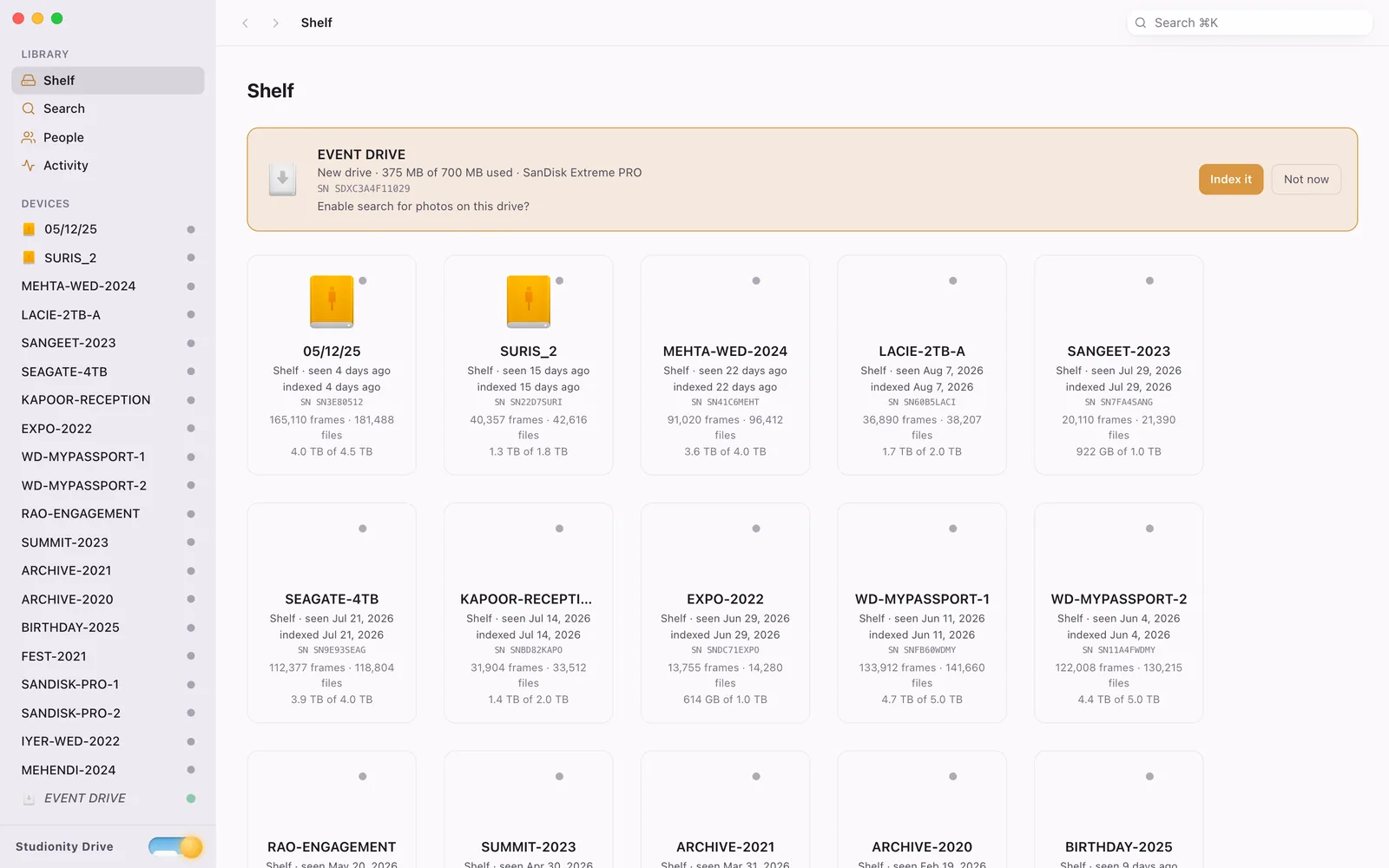
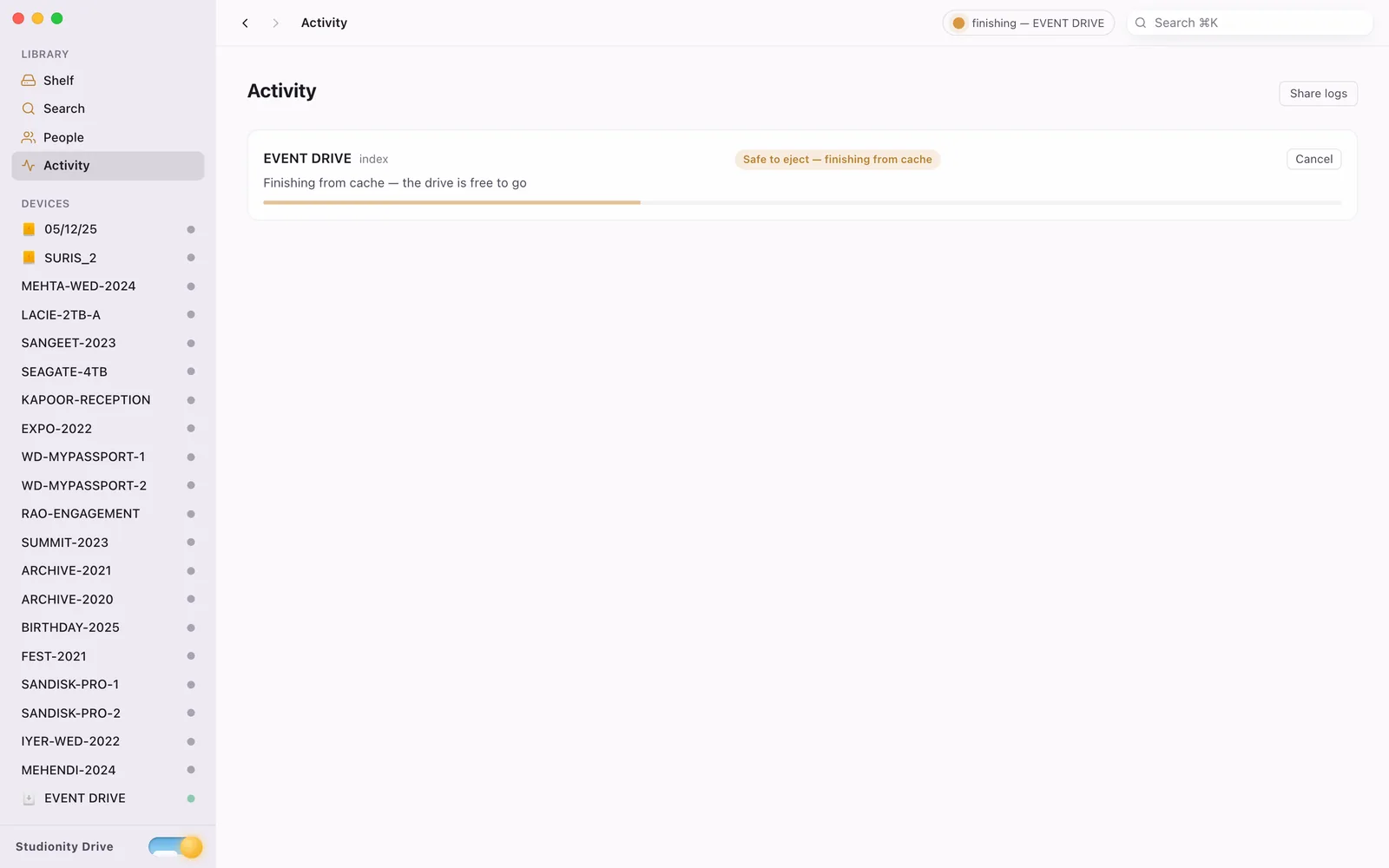
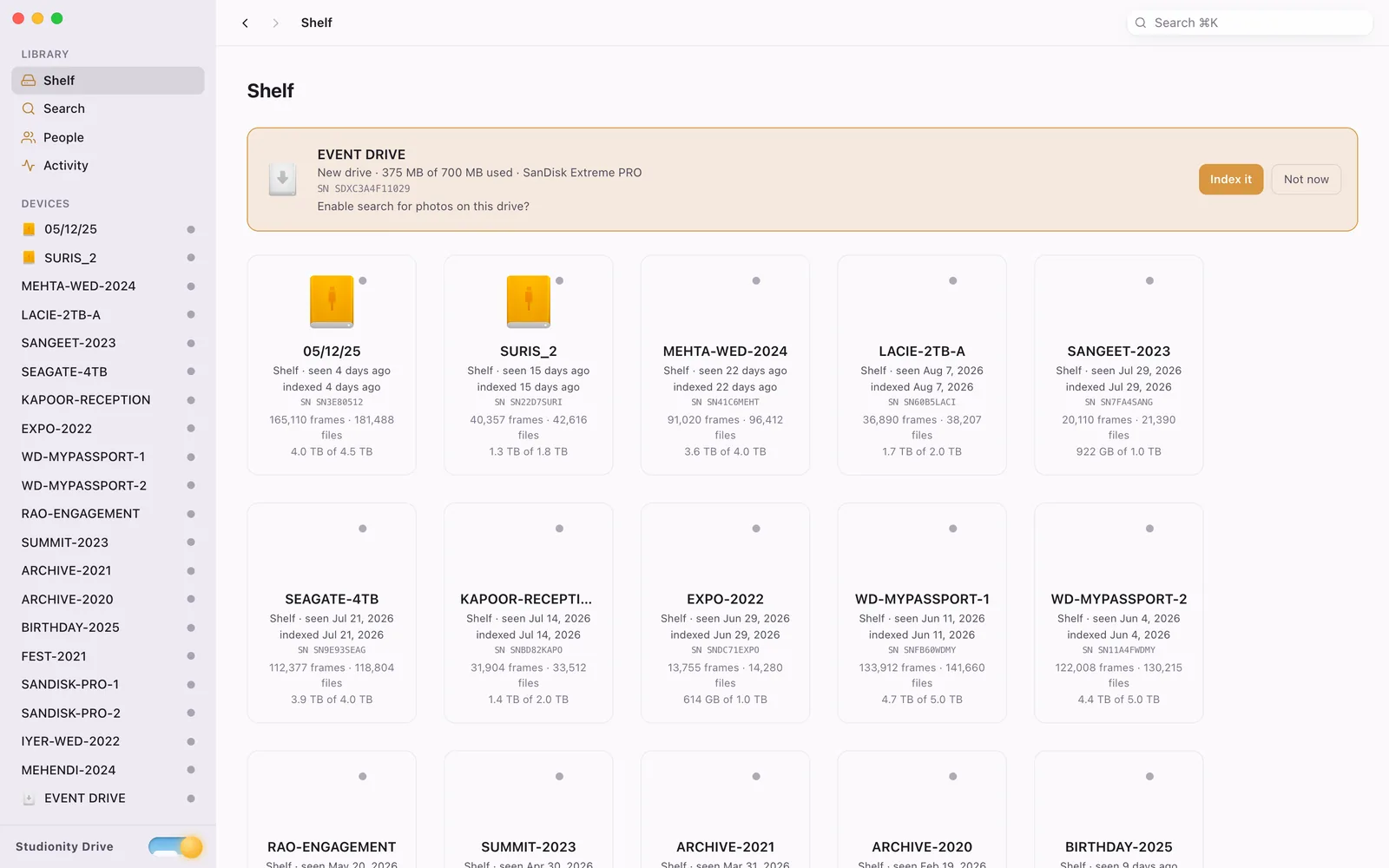
Plug in a new one. Index it once. Eject. The catalogue stays. Every hard drive you have ever indexed sits on one shelf, with what is on it, whether it is connected or in a drawer across town.
- Unlimited drives, unlimited storage. It indexes your own hard drives, so the only limit is how many you own.
- Save your hard drives. Use them without plugging them in, so they spin up only when you actually fetch a file.
- Search tells you the hard drive. Fetch one drive instead of six.
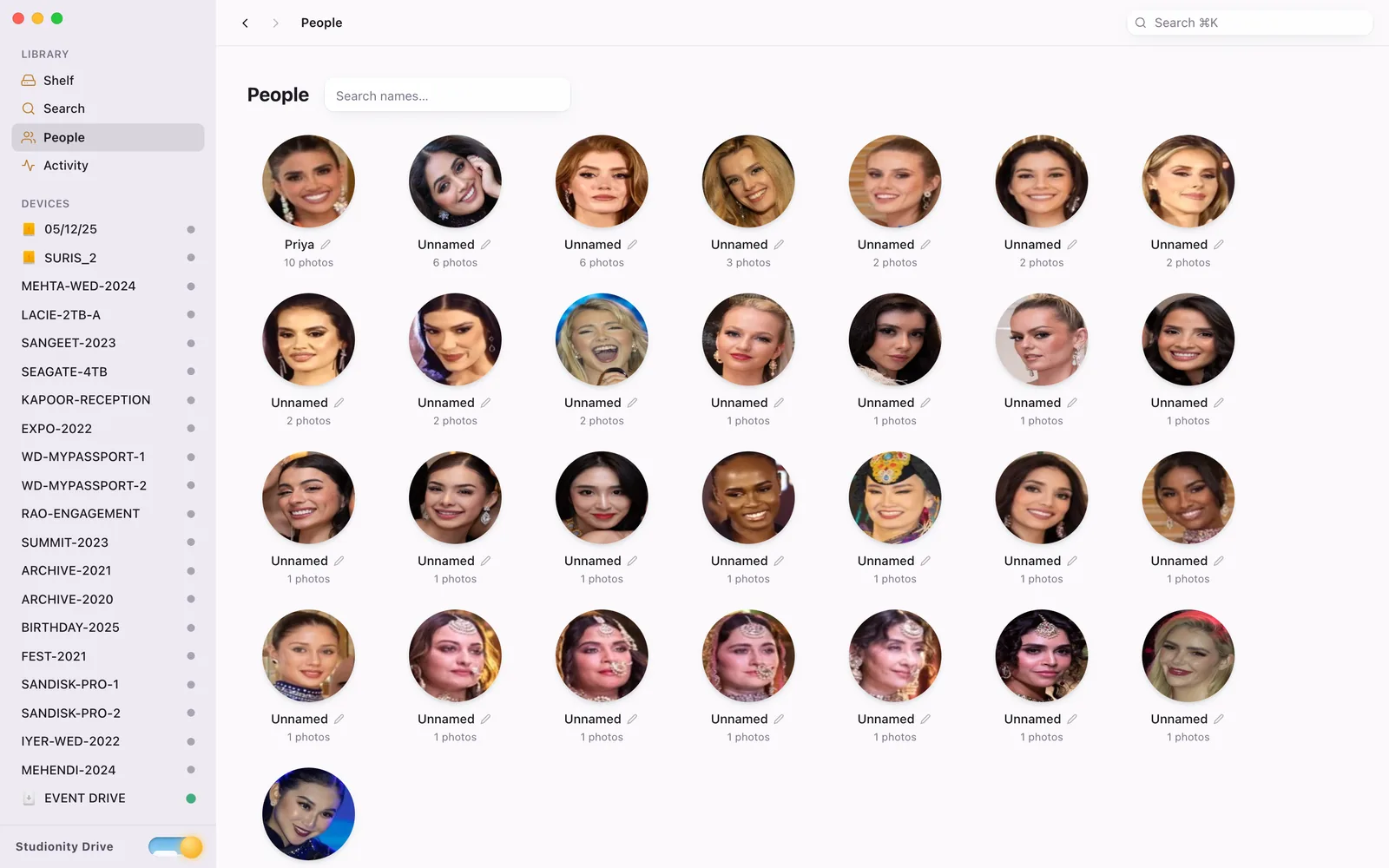
2,196 people found across 45 hard drives.
Name a face once and search by name later, across all hard drives.
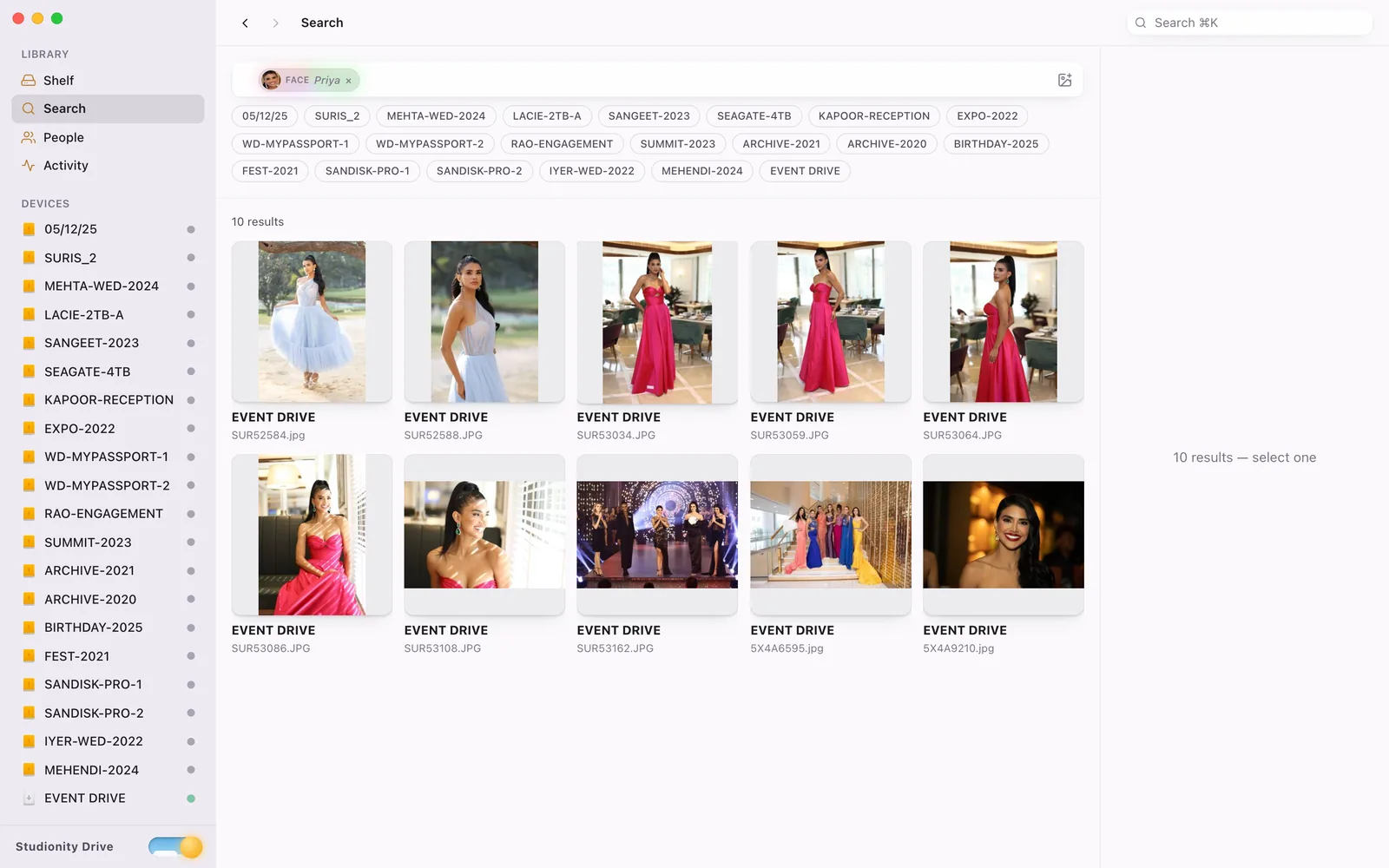
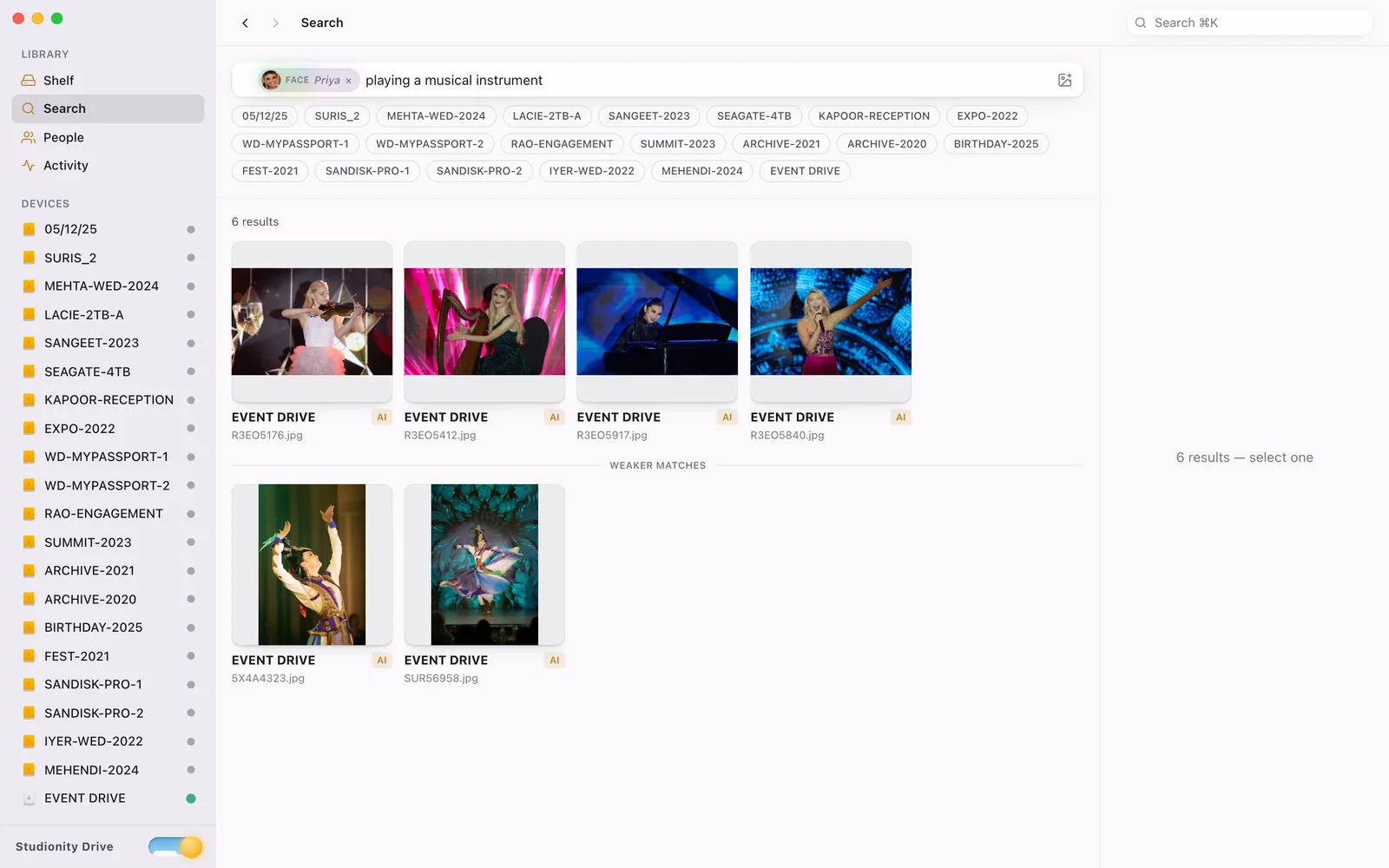
Drop a photo of her.
A client sends one picture on WhatsApp and asks for everything from her sister's wedding. Drop it on the search bar, pick the face, and every shot of her comes up, from every hard drive.
Which face? This one.
Every shot of her. Every hard drive.

No more remembering paths and file names.
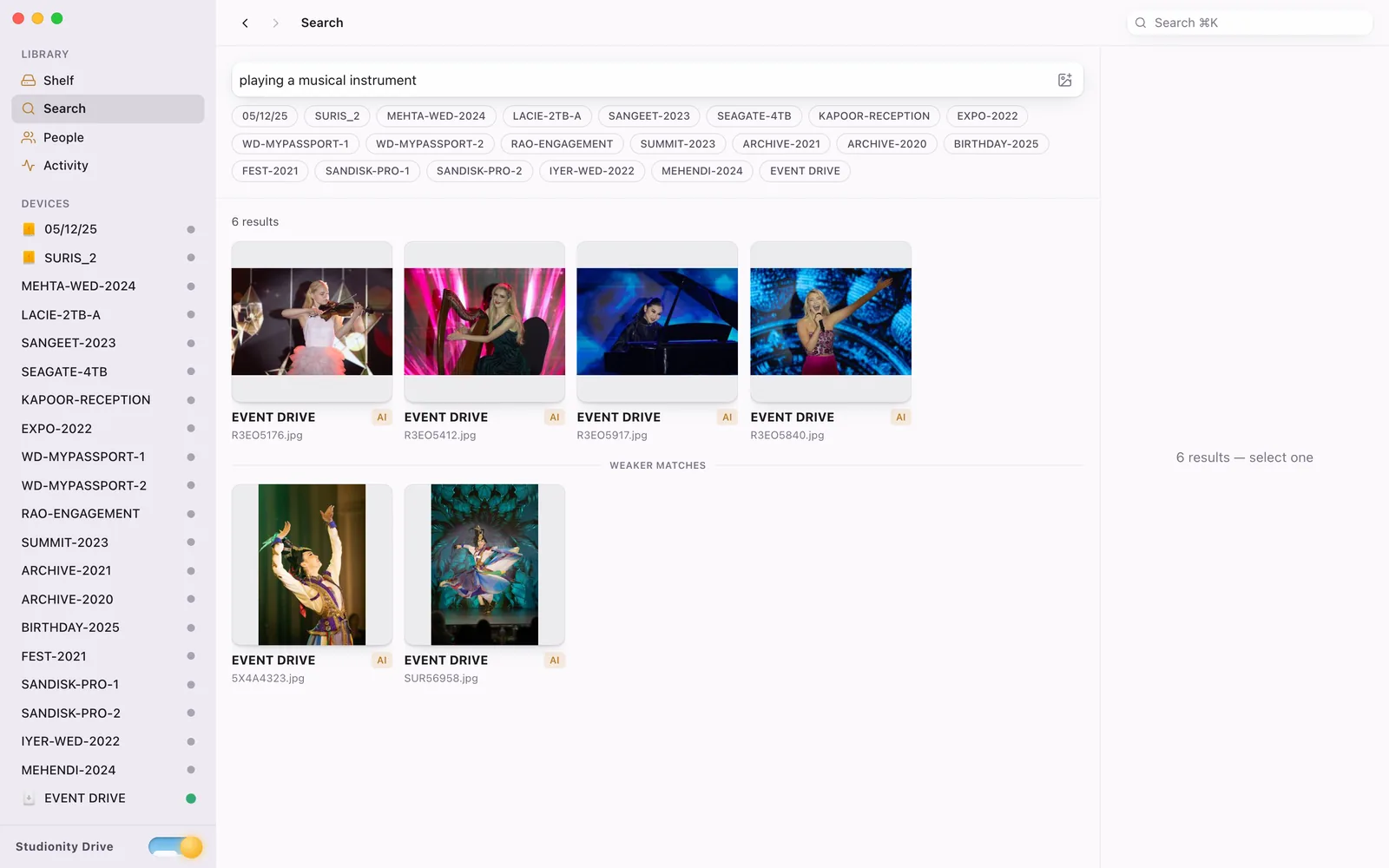
Search by what is in the photo. Describe it the way you remember it, in English or Hinglish, with or without a face, and the shelf answers.
Type rashtriya and the banner reading राष्ट्रीय comes up. It reads what is written in the frame too.
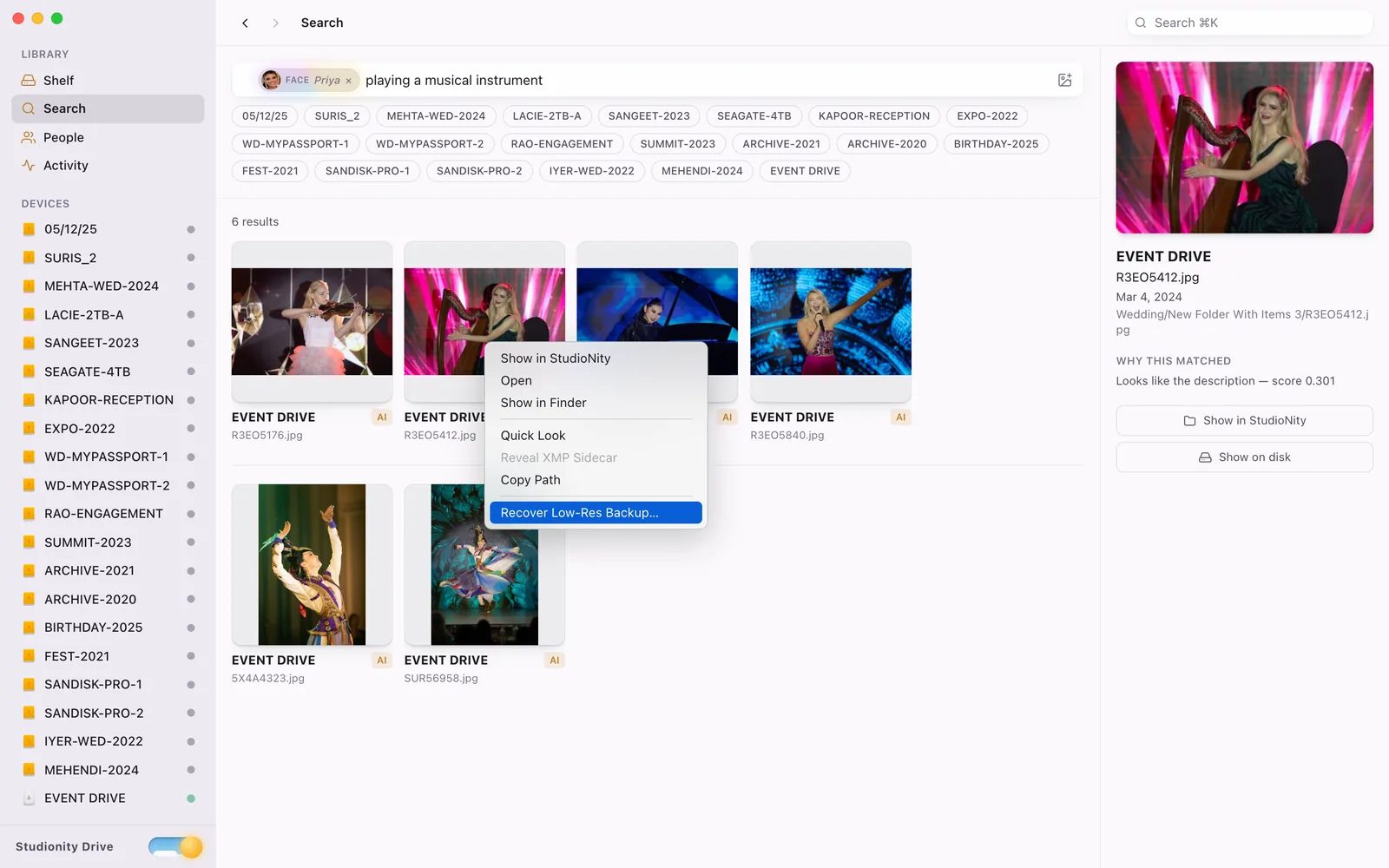
Lose a drive? Emergency backup, built in.*
Every index keeps a low-res preview of each photo. When a hard drive stops spinning, the previews are still on your shelf: enough to recognise the shoot, find the frame and hand a client something. Something is better than nothing.
In a drawer? Still searchable. Nothing uploaded.
Indexing and search run on your own computer. The archive never leaves the room, the internet is needed once for activation, and the licence is yours.
Get a lifetime licence now.
Payment received. This is your licence key. It has also been emailed to you. Keep it safe:
Next: download and install. Open the installer, follow the prompts, then paste this key on the activation screen.
Saved to your downloads. If your browser blocked it, use Save my key as a file above.
We store your key encrypted, so we can send it to you again if you lose it. Keep your own copy anyway.
Full price₹15,999−37%
₹9,999
Lifetime licence for Studionity Drive on macOS or Windows.
FAQs
How do I search hard drive photos by face?
Index each drive once. After that you search the whole archive by who is in the frame, by date or by describing the photo, instead of opening hard drives one at a time and guessing at folder names.
Can it find photos on a drive that is unplugged?
Yes. The catalogue outlives the connection. Search returns the file and tells you which hard drive it lives on, so you fetch one drive instead of six.
Does anything get uploaded?
No. Indexing and search run on your machine, and your photos and catalogue never leave it. The internet is only needed for activation and a one-time download of about 1.8 GB of recognition resources.
What is the emergency backup?
Every index keeps a low-resolution preview of each photo. If a hard drive dies, the previews are still there to recognise, find and hand over. It is a recovery of previews, not of the original files.
Is there a free trial?
Yes, 15 days: index and browse one drive, up to 1 TB of hard drive capacity. Search and people come with a licence, and your key unlocks them whenever you buy.
Can I move my licence to another computer?
Yes. One licence runs on one computer at a time. Release it from the licence screen on the machine you are leaving and the same key activates the new one. If the old machine is gone, write to contact@studionity.com and we will sort it out.
Is it a subscription?
No. One payment of ₹9,999 for a lifetime licence. The licence is yours. It is standalone desktop software and needs no Studionity account.
Stop plugging in drives one at a time.
One payment, one key, and the whole shelf answers to a search box.
*Low-res recovery: previews kept in your index, not the originals.